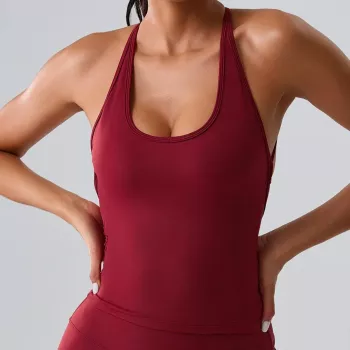
Racerback sports bras can be better for many workouts because the strap design pulls inward between the shoulder blades, which often improves stability and reduces strap slippage. That said, “better” depends on your body, comfort needs, and the activity you’re doing. Some people love the locked-in feel, while others prefer the more open, less restrictive fit of classic straps.
Racerback styles tend to shine during higher-movement workouts like running, HIIT, court sports, and fast-paced classes. The inward strap placement can distribute tension across the upper back and help keep the bra anchored when you’re jumping or changing direction. If you frequently adjust slipping straps, a racerback may feel more secure.
Some racerbacks can feel tight around the traps or upper back, especially if the band is snug and the fabric has limited stretch. The cut can also make them harder to put on and take off, particularly in sweat or if the bra is high-compression. If you’re doing low-impact activities (walking, yoga, barre) and prioritize ease and breathability, a different strap style might feel more comfortable.
Start with the band: a supportive, comfortable band does most of the work. Then consider the level of compression vs. encapsulation (individual cup support), and whether the straps are adjustable. For fuller busts, a racerback can be excellent when combined with structured cups and a firm band; for smaller busts, a lighter racerback can provide a sleek, minimal feel without sacrificing comfort.
For a deeper breakdown of fit, comfort, and activity-based recommendations, read the full guide here: https://empressbazaar.shop/are-racerback-sports-bras-better/.
Compression bras press the chest closer to the body to reduce bounce, while encapsulation bras support each breast separately with shaped cups. Many high-support bras combine both for better control and comfort.











Leave a comment